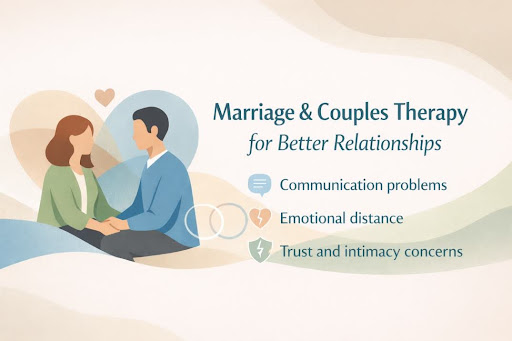
Flourishing partnerships are developed over time, not accidentally. Even partners who share deep affection may encounter difficulties like communication breakdowns, emotional distance, unresolved disagreements, or strain from day-to-day demands. Therapy for marriage and couples provides a supportive, structured avenue for partners to gain better insight into one another, enhance their bond, and build more constructive relationship dynamics.
Seeking therapy doesn’t signify a relationship’s failure. Often, it shows a joint dedication to development, mutual understanding, and lasting emotional health.
Also Read: Does Couples Therapy Work – Research and Success Rates
What Does Marriage & Couples Therapy Involve?
Marriage & couples therapy is a professional mental health service aimed at the relationship unit itself, rather than assigning fault to one person. A skilled counselor collaborates with both individuals to examine how they interact, manage disputes, express feelings, and react to stress.
Rather than determining right or wrong, therapy assists couples in identifying interaction patterns that might be causing recurring tension. With professional direction, partners learn to substitute counterproductive habits with more beneficial ways of relating that encourage trust, mutual respect, and a sense of emotional security. This form of support is beneficial for married pairs, those planning to wed, and established relationships at any juncture.
When Counseling for Partners Can Be Beneficial
Many couples postpone seeking support until issues feel insurmountable. Yet, therapy is frequently more impactful when concerns are addressed sooner.
Marriage & couples therapy may be advantageous when:
- Discussing topics often escalates into arguments
- One or both individuals frequently feel unheard or misinterpreted
- Emotional or physical closeness has diminished
- Faith in the relationship has eroded over time
Shifts in life such as starting a family, financial worries, or work pressures cause friction
Addressing issues early can stop minor misunderstandings from evolving into deep-seated bitterness.
Also Read: Family Therapy
Typical Relationship Challenges Addressed in Counseling
Communication Hurdles
Mixed messages are among the most frequent obstacles couples encounter. Therapy assists partners in conveying thoughts and feelings clearly while learning to listen without feeling attacked or judgmental.
Emotional Disconnect
As time passes, partners might feel isolated or emotionally distant. Therapy facilitates reconnection by helping each person grasp the other’s emotional requirements and reactions.
Rebuilding Trust and Healing
Trust can be jeopardized by unmet expectations or unaddressed hurt. Couples counseling aids in discerning if mending is feasible and what steps are necessary for a gradual restoration of faith.
Intimacy Issues
Difficulties with intimacy, both emotional and physical, are common and can be hard to bring up. Therapy establishes a secure and respectful setting to explore these subjects openly.
Strain from Major Life Shifts
Significant life changes like new parenthood, fiscal pressure, health issues, or caregiving duties can impose stress on relationships. Therapy helps couples navigate these periods as a team.
The Process of Marriage & Couples Therapy
Therapy usually starts with an evaluation period, where the counselor learns about the relationship’s background, strengths, and difficulties. Instead of concentrating on isolated incidents, therapy examines the repeating cycles that keep couples feeling stuck.
Throughout the engagement, couples acquire tangible skills such as:
- Regulating feelings during disagreements
- Voicing needs without assigning blame
- Mending things following arguments
- Establishing consistent habits of connection
Improvement takes effort from both individuals, but significant positive change is achievable with commitment.
Modalities of Marriage & Couples Therapy
Counselors may employ various research-backed methods based on what the couple needs. Some focus on emotional attachment and bonding, while others emphasize sharpening communication skills and altering behavior. Many practitioners blend several techniques for comprehensive support.
Couples might also opt between attending sessions in person or utilizing online couples therapy, which can offer enhanced convenience and access.
Also Read: Does Insurance Cover Couples Therapy
Advantages of Partner and Marriage Counseling
Couples who participate in therapy frequently observe:
- Sharper communication and fewer conflicts
- Deeper emotional comprehension
- Healthier boundaries and sensible expectations
- Increased assurance in managing future challenges
- Greater overall contentment with the relationship
Even if some issues persist, therapy equips couples to respond with more clarity and emotional insight.
Scenarios Where Therapy Might Not Be Appropriate
Marriage & couples therapy is unsuitable when there involves ongoing mistreatment, fear, or manipulative control. In these contexts, individual support and resources prioritizing safety are paramount. A competent professional can direct individuals toward the correct next steps.
Conclusion
Strong relationships require intention, self-awareness, and ongoing effort. Marriage & couples therapy offers couples the opportunity to pause, reflect, and rebuild healthier ways of connecting. The Perfect Prescription supports relationship growth by focusing on understanding, balance, and emotional well-being.