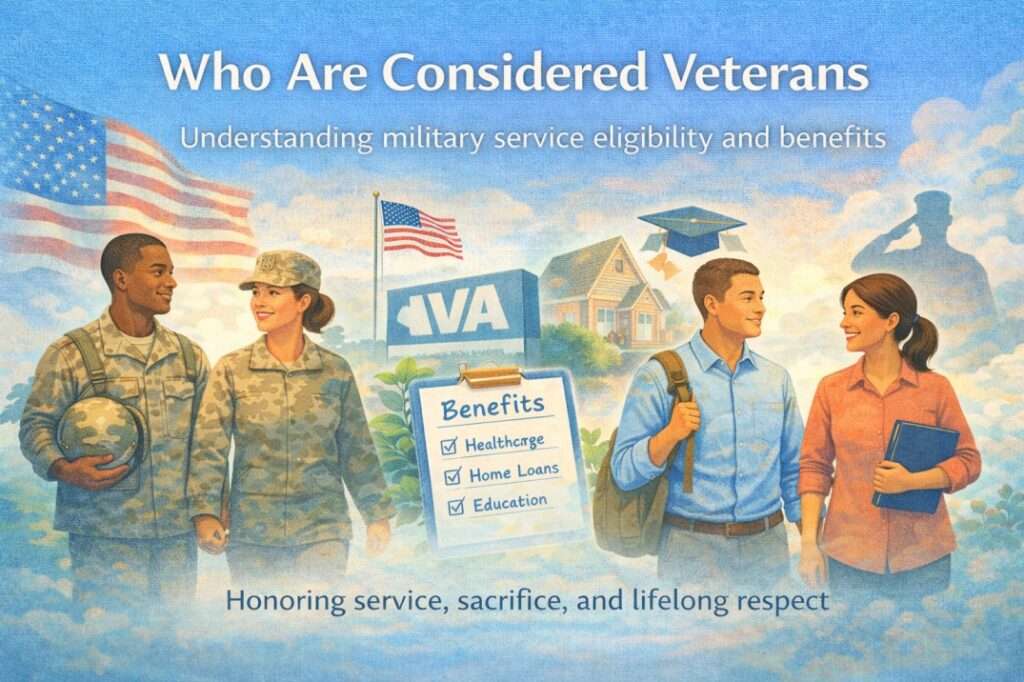
Veterans are people who have served in the military and now live as civilians. They put on a uniform, trained hard, and did their duty for their country. Some saw combat, others helped behind the scenes, but all earned the title through brave service. You don’t have to fight in a war to be a veteran, any honorable service counts. It’s about sacrifice and commitment, not just battles.
Why It Makes Sense
Life after service brings changes like new jobs, family life, or health needs. Governments and communities honor veterans with benefits like healthcare, education help, and job priority. Knowing who qualifies opens doors to support. Many veterans face stress from their time in service, so special programs exist just for them. This respect shows gratitude for their role in keeping us safe.
The Basic Requirements
Military experts break it down into simple rules:
Active Duty Service: Most veterans served full-time in the armed forces, army, navy, air force, marines, or coast guard.
Honorable Discharge: They left service in good standing, not due to bad behavior. A general discharge under honorable conditions often works too.
Time Served: Usually at least 90 days active duty during wartime, or 24 months peacetime, but rules vary by country. National Guard or Reserves count if called to federal duty.
No Big Exceptions: Dishonorable discharges don’t qualify, but medical or hardship outs might.
Here’s a quick table that shows them side by side:
| Requirement | Who It Covers | Examples from Real Life |
| Active Duty | Full-time soldiers | Deployed troops or base staff |
| Honorable Discharge | Good standing exit | Retirement after 20 years |
| Minimum Time | 90 days wartime | Basic training + deployment |
Easy Ways to Check If You Qualify
You don’t need a lawyer to start. Simply do the following:
- Get Your DD-214: This form proves your service, ask the military records office.
- Check Discharge Status: Look for “honorable” or “general under honorable.”
- Review Service Dates: Match wartime periods like Gulf War or post-9/11.
- Contact VA or Equivalents: Free help lines explain benefits fast.
- Pay attention to special cases: Women, minorities, or disabled vets have extra paths.
Governments make it simple with online portals and local offices open to all who served.
What You Will Gain
Veterans get healthcare, home loans, college aid, and job training. Families receive survivor benefits too. It also builds pride, parades, discounts, and thanks from strangers. Vets who use these supports live healthier, work steadier, and enjoy retirement more.
Questions that come up a lot
- Does Reserves count? Yes, if activated federally.
- How do I begin? Request your records today, like a simple form online.
- Is it free to apply? Yes, no cost for most benefits.
- What if my discharge is iffy? Ask for an upgrade, many win.
Veteran status isn’t a quick label; it’s earned respect that lasts a lifetime. Are you ready to claim what’s yours? Get in touch with The Perfect Prescription right away for quick help.