
Childhood marks a period of quick growth emotionally, socially, and intellectually. While many youngsters pass through this phase easily, others face difficulties with feelings, conduct, or events that feel overpowering. Often, children lack the vocabulary or emotional maturity to articulate their inner state, so distress might manifest as unease, anger, withdrawal, outbursts, or academic struggles. Therapy for children, also known as child guidance, aims to assist youngsters in grasping their emotions, handling hurdles, and cultivating sound coping mechanisms in a nurturing and age-appropriate manner.
What Is Therapy for Children?
Child therapy is a specialized type of mental health assistance focused on the emotional and conduct-related needs of kids and teens. Differing from adult counseling, child therapy is tailored to a child’s developmental stage and how they best communicate. Therapists might employ play, art, narratives, structured activities, and discussion to help children convey thoughts and feelings they might not yet be able to voice.
Often, parents or guardians are included in the child therapy process. This joint effort aids in cementing progress at home and fortifies family connections, fostering a more supportive setting for the youngster.
What Child Therapy Addresses
Emotional Difficulties
Children experience a range of feelings, yet some can become intense or linger. Child therapy frequently assists with:
- Worry and excessive apprehension
- Low spirits and persistent unhappiness
- Irritability, frustration, and sudden displays of emotion
- Low self-worth or a lack of assurance
- Sorrow and personal losses
Through therapy, children learn to recognize feelings, express them safely, and manage emotional reactions more capably.
Also Read: Exploring the Connection Between Mental and Physical Health
Conduct Issues
Behavior frequently serves as a child’s method of signaling unaddressed emotional requirements. Child therapy supports youngsters grappling with:
* Frequent outbursts or disobedient conduct
* Aggressiveness or acting without thinking
* Trouble adhering to guidelines
* Behavioral challenges at school
* Difficulties forming and maintaining friendships
Instead of solely aiming for behavior modification, therapy delves into the underlying causes and teaches more constructive alternatives.
Trauma and Stressful Incidents
Children might require therapeutic support following challenging or overwhelming occurrences such as:
* Physical, emotional, or sexual mistreatment
* Being victimized by peers or bullying
* Family discord, separation, or divorce
* Significant life shifts like relocating or switching schools
* The passing of a loved one or a serious health issue
Child therapy offers a secure space for youngsters to process these events and re-establish a sense of security and reliance.
Mental Health Conditions
Child therapy also has an important role in supporting children diagnosed with mental health conditions, including:
* Attention-Deficit/Hyperactivity Disorder (ADHD)
* Obsessive-Compulsive Disorder (OCD)
* Issues with eating
* Conditions linked to trauma
Early therapeutic intervention can substantially enhance long-term emotional and behavioral outcomes.
Also Read: The Role of Therapy in Mental Health Wellness
How Therapy for Children Works
Child therapists utilize proven methods customized to each child’s age, specific requirements, and persona.
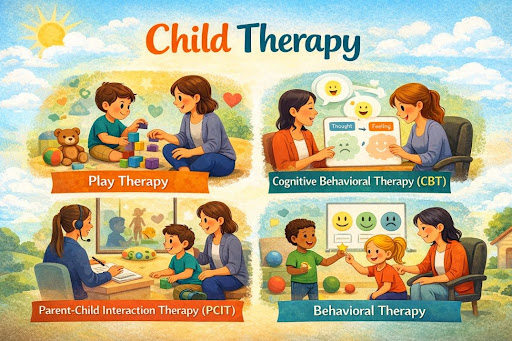
Play Therapy
Play therapy proves especially useful for younger children. Through toys, creative materials, and make-believe, youngsters naturally reveal emotions and experiences. Play becomes the child’s primary means of expression, facilitating healing without the pressure to articulate complex feelings verbally.
Cognitive Behavioral Therapy (CBT) Adapted for Children
CBT helps children see the link between their thoughts, feelings, and actions. In child therapy, CBT is modified with straightforward language and activities to help youngsters manage worry, question unhelpful thinking patterns, and develop skills for resolving issues.
Parent-Child Interaction Therapy (PCIT)
PCIT is frequently utilized for children aged 2 to 7. Therapists coach parents in real-time, assisting in strengthening the parent-child bond while enhancing conduct management and emotional connection.
Behavioral Therapy
Behavior therapy concentrates on reinforcing constructive conduct and diminishing problematic actions through consistency and structure. Parents are actively involved to ensure strategies are implemented at home and in educational settings.
Who Benefits From Child Therapy?
Advantages for Children
Child therapy aids youngsters in:
* Cultivating the ability to manage their feelings
* Improving how they communicate and interact socially
* Boosting self-assurance and self-worth
* Acquiring healthy ways to cope
* Building up emotional toughness
Advantages for Parents and Families
Parents receive direction, resources, and support to better grasp and respond to their child’s needs. As children’s emotional states improve, families often experience enhanced dialogue, less friction, and stronger relationships.
When to Consider Therapy for a Child
You might consider seeking child therapy if:
* Emotional or behavioral issues are severe or persistent
* Difficulties are impacting school performance, friendships, or home life
* Your child has gone through trauma or significant stress
* Problems are not resolving with current support efforts
* Your family feels overwhelmed or uncertain how to provide assistance
Early involvement can stop challenges from escalating and support healthy emotional growth.
Final Thoughts
Child therapy is a caring and highly effective method to support a child’s emotional, behavioral, and mental welfare. By integrating established techniques, a safe and supportive ambiance, and meaningful family participation, child therapy assists youngsters in building assurance, resilience, and more positive connections. At The Perfect Prescription, child therapy centers on understanding each child’s unique needs and guiding them toward enduring emotional strength and complete well-being.